
©2021 Reporters Post24. All Rights Reserved.


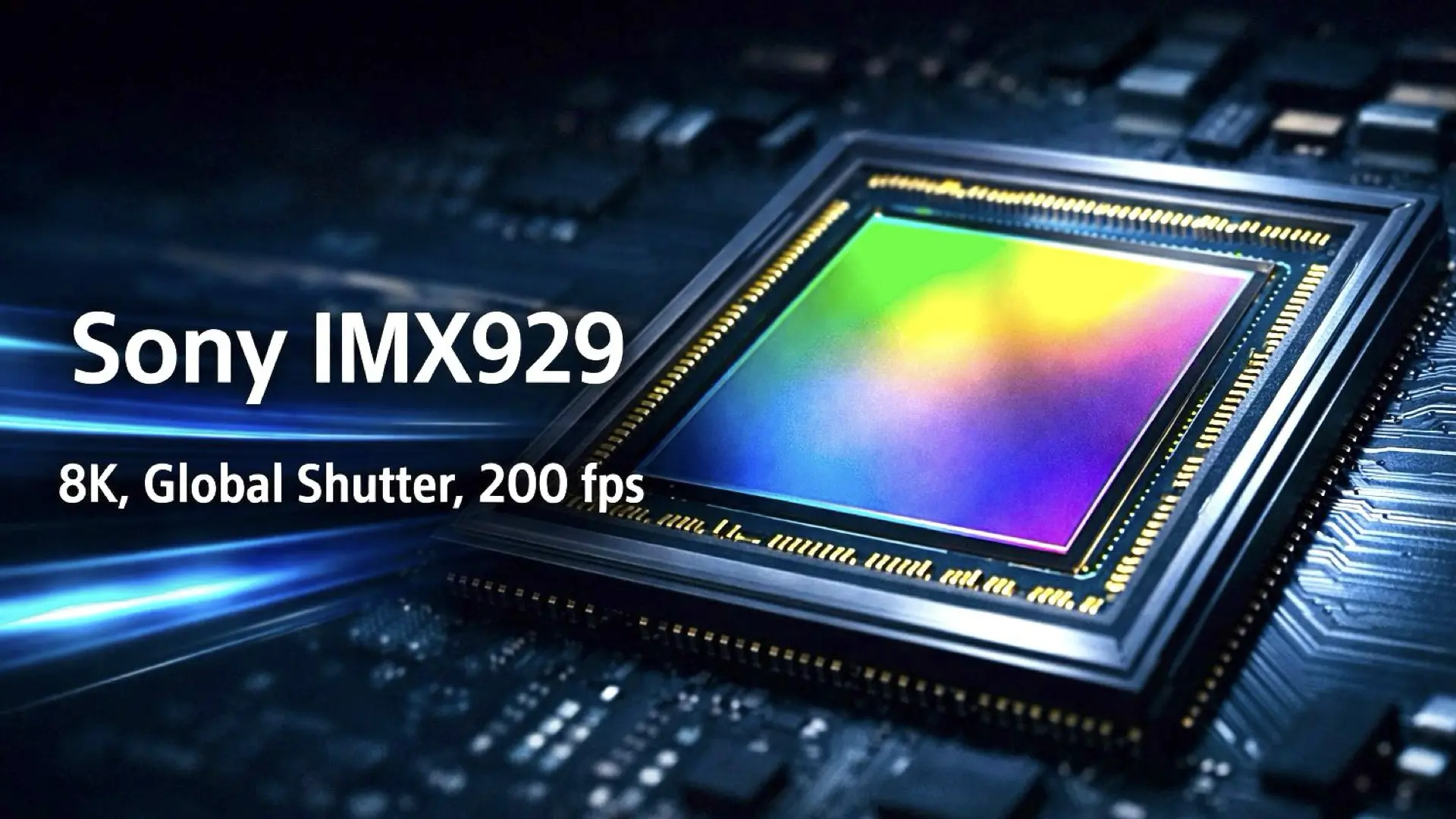
In continuation of our previous article about the IMX928, we saw that Sony has quietly added another member to its global shutter sensor family that flips one of the biggest constraints in high-resolution imaging: readout speed. A few days ago, we covered the arrival of the large-format global shutter Sony IMX928, and today we’re highlighting its smaller but much faster sibling, the Sony IMX929, which pushes 8K-class resolution beyond 200 frames per second with a true global shutter. This is not a cinema camera announcement, and it is not framed as a new standard like Super 35 or full frame. Instead, it is a technology signal of how far sensor readout performance can go when speed is prioritized. Let’s check it out.
 IMX929-AMB/AQB comparison table
Where the IMX928 is notable for its large format and wider field of view, the IMX929 trades size for raw throughput. It uses the same Sony Pregius S global shutter architecture we discussed with the IMX928. That means a stacked CMOS design and simultaneous pixel exposure. The key difference is that IMX929 is optimized for high-speed full-sensor readout rather than maximum geometric size. This yields a sensor that is physically smaller than its larger counterpart, yet capable of achieving massive frame rates without rolling shutter distortion. This combination is uncommon at this resolution class.
What the numbers mean: ~50MP at high fps
The IMX929 does not map to traditional video resolution labels, and it should not be described as a cinema standard like Super 35. What makes it noteworthy is how it pushes a very high pixel count at speed: around 8224 × 6176 effective pixels, which is above 8K UHD horizontally and vertically. That places it in the “8K-class” category in terms of raw pixel count. ~200 fps at 10-bit precision. ~136 fps at 12-bit precision.n These figures come from industrial camera implementations of the IMX929 and reflect full-sensor continuous frame rates without subsampling or heavy windowing. This means every frame at every pixel is read out simultaneously, thanks to the global shutter design. High frame rates and global shutter have historically been at odds with high resolution. Traditional sensors either roll their shutter, introducing skew and motion artifacts at speed, or slow down readout as resolution increases, limiting fps. IMX929 demonstrates that global shutter and high resolution need not mean slow motion capture. The result is a sensor that can deliver very fast motion capture with no rolling shutter artefacts across every pixel. This has direct relevance for workflows that depend on clean motion geometry and extremely fast capture, including: Technical slow motion plates, robust motion vector extraction, precision timing in high-speed action capture, VFX data that demands geometric integrity, and so on. Those benefits are not tied to a specific “cinema resolution” label. They are tied to how motion is recorded and how reliably frame data can be interpreted downstream.

